
Forklift Anti-Collision Avoidance System: Transforming Industrial Workplace Safety

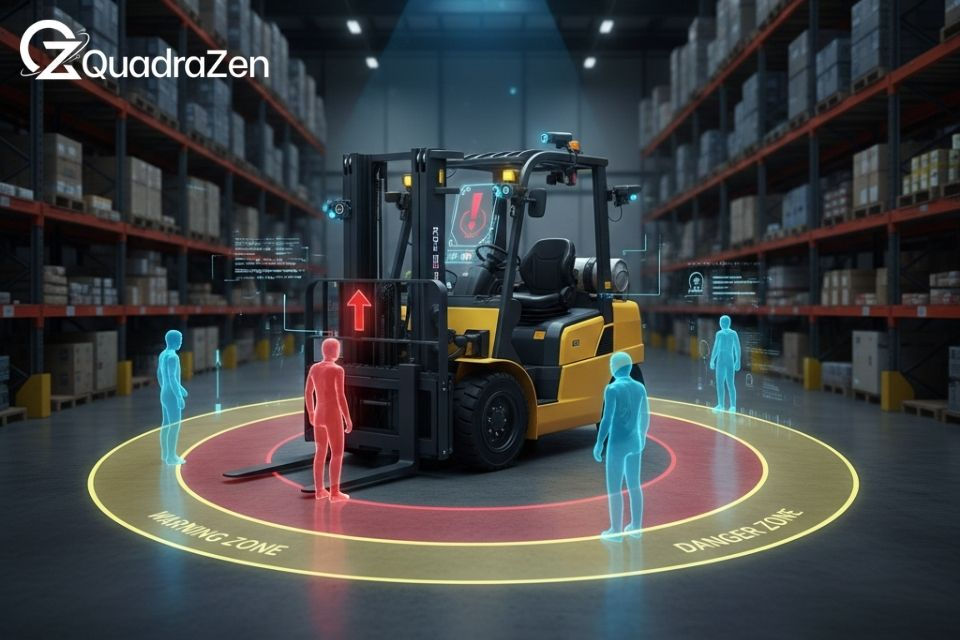
In modern manufacturing plants, warehouses, logistics hubs, and industrial facilities, forklifts play a critical role in material handling and internal transportation. However, the high frequency of forklift movement in shared operational areas also creates significant safety risks, particularly involving forklift-to-forklift, forklift-to-pedestrian, and forklift-to-infrastructure collisions.
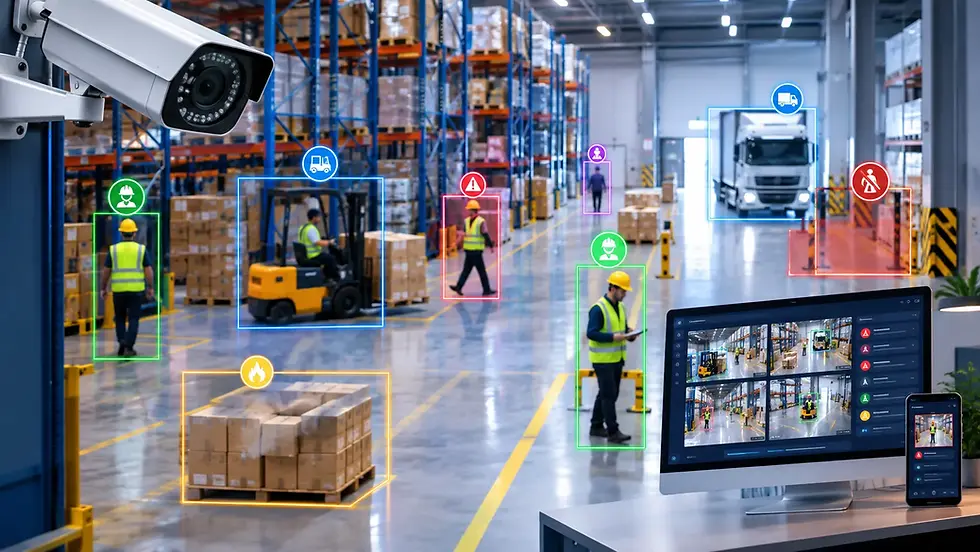
A Forklift Anti-Collision Avoidance System provides an intelligent safety layer that continuously monitors the operating environment, detects potential collision risks, and alerts operators before an accident occurs. Advanced solutions can combine AI-powered cameras, proximity sensors, intelligent warning systems, vehicle control mechanisms, and real-time monitoring to create a comprehensive industrial vehicle safety ecosystem.
What Is a Forklift Anti-Collision Avoidance System?
A Forklift Anti-Collision Avoidance System is an intelligent safety solution designed to detect people, vehicles, obstacles, and restricted zones around a forklift and provide timely warnings or automated intervention when a collision risk is identified.
Unlike conventional safety methods that depend entirely on operator awareness, advanced systems use a combination of AI, computer vision, proximity detection, real-time analytics, hooter, biometric authentication and automated safety controls to continuously monitor the surrounding environment.
The system can be configured according to the operating conditions of a plant, warehouse, or logistics facility.
Why Forklift Collision Prevention Is Important?
Forklifts operate in dynamic environments where pedestrians, heavy vehicles, storage racks, machinery, and other forklifts frequently share the same workspace. Limited visibility, blind spots, reversing operations, high traffic density, and operator fatigue can increase the possibility of accidents.
Common risks include:
Forklift-to-pedestrian collisions
Forklift-to-forklift collisions
Collision with machinery and infrastructure
Blind-spot incidents
Reversing accidents
Unauthorized forklift operation
Excessive vehicle speed
Movement into restricted areas
Unsafe interaction between pedestrians and industrial vehicles
A proactive collision avoidance system helps organizations move from a reactive safety approach to a preventive safety model.
How the Forklift Anti-Collision System Works?
A modern system typically consists of multiple integrated safety technologies.
360-Degree AI Camera
AI-powered cameras provide comprehensive visibility around the forklift and help identify objects, pedestrians, vehicles, and potential hazards.
Computer vision algorithms can analyze the surrounding environment in real time and identify situations that require operator attention.
The 360-degree camera approach also helps address conventional forklift blind spots, particularly during reversing and turning operations.
Proximity Detection Sensors
Proximity sensors continuously monitor the distance between the forklift and nearby objects or personnel.
When a person, vehicle, or obstacle enters a predefined safety zone, the system evaluates the proximity condition and generates an appropriate warning.
Different detection zones can be configured depending on:
Vehicle speed
Operating environment
Forklift type
Plant layout
Pedestrian movement
Risk level
Intelligent Hooter and Visual Alerts
The system provides immediate alerts to the forklift operator and, where required, nearby personnel.
Alert mechanisms can include:
Intelligent hooters
Audible alarms
LED indicators
Warning displays
Visual beacons
Operator notifications
The warning intensity can be configured according to the severity of the detected risk.
Automatic Speed Control
The system can be integrated with forklift control mechanisms to enforce predefined speed limits in designated areas.
For example, a plant can configure different speed limits for:
Production areas
Pedestrian zones
Warehouse aisles
Loading/unloading areas
Intersections
High-risk operational zones
This helps reduce the consequences of unexpected pedestrian or vehicle movement.
Automatic Vehicle Stoppage
For critical collision scenarios, the system can be integrated with an appropriate vehicle-control interface to initiate controlled vehicle stoppage.
This provides an additional layer of protection when the detected risk exceeds a predefined safety threshold.
The exact implementation depends on the forklift model, electrical architecture, safety requirements, and OEM-approved integration method.
Biometric Operator Authentication
Forklift safety can also be extended beyond collision prevention.
Biometric authentication can ensure that only authorized and trained personnel operate the vehicle.
The system can validate the operator before enabling vehicle operation and can integrate with organizational authorization policies.
This helps prevent:
Unauthorized forklift operation
Untrained operator usage
Operator identity mismatch
Non-compliance with access policies
Benefits of Forklift Anti-Collision Technology
Enhanced Workplace Safety
The primary objective is to reduce the probability and severity of forklift-related incidents by providing early warnings and, where appropriately engineered, automated intervention.
Reduced Blind-Spot Risk
AI cameras and proximity sensors provide additional visibility around the forklift, particularly in areas where the operator's direct line of sight is limited.
Improved Operator Awareness
Real-time audible and visual alerts help operators respond quickly to changing conditions.
Reduced Near-Miss Events
Identifying potential hazards before they develop into collisions can help organizations reduce near-miss incidents and improve safety performance.
Improved Operational Efficiency
Better traffic management, controlled vehicle movement, and data-driven analysis can help improve internal material-handling operations.
A Step Towards Smart Industrial Safety
Forklift anti-collision technology is more than a vehicle safety device. It can become an important component of a Smart Factory and Industrial IoT ecosystem.
Conclusion
Forklifts are essential to modern industrial operations, but their movement in shared workspaces introduces significant safety challenges. A well-designed Forklift Anti-Collision Avoidance System provides an additional technological safety layer by combining AI-based vision, proximity detection, intelligent alerts, operator authentication, geo-fencing, speed monitoring, and controlled vehicle intervention.
For manufacturing plants, warehouses, logistics facilities, and large industrial campuses, such systems can support a proactive approach to workplace safety while generating valuable operational data.
At QuadraZen Consultancy Pvt. Ltd., we develop and implement intelligent industrial safety solutions that integrate AI, IoT, vehicle monitoring, collision avoidance, and centralized analytics to address the specific operational requirements of industrial environments.
Our objective is simple: make industrial vehicle movement safer, smarter, and more connected.
Comments